
How Datacenter Connectivity Supports Large-Scale Digital Projects?
Behind every large digital operation sits a dependency nobody talks about until it fails: the physical connection between servers and the open internet. A price comparison site returning results in under two seconds, a QA team testing app performance across 14 countries before lunch, and an e-commerce scraper pulling 10,000 product listings overnight. None of that works without datacenter connectivity doing the boring, invisible heavy lifting.
And yet most project leads treat it like plumbing. They only care when the pipes burst.
Location Still Matters (More Than You’d Think)
There’s this idea floating around that cloud services killed geography. They didn’t. Put a server in Virginia and ask it to talk to a website hosted in Frankfurt, and you’re adding roughly 100ms of round-trip latency versus a proxy based in Amsterdam. One request? Who cares. Fifty thousand requests in an automated pipeline? That’s the difference between finishing by morning and still running at noon.
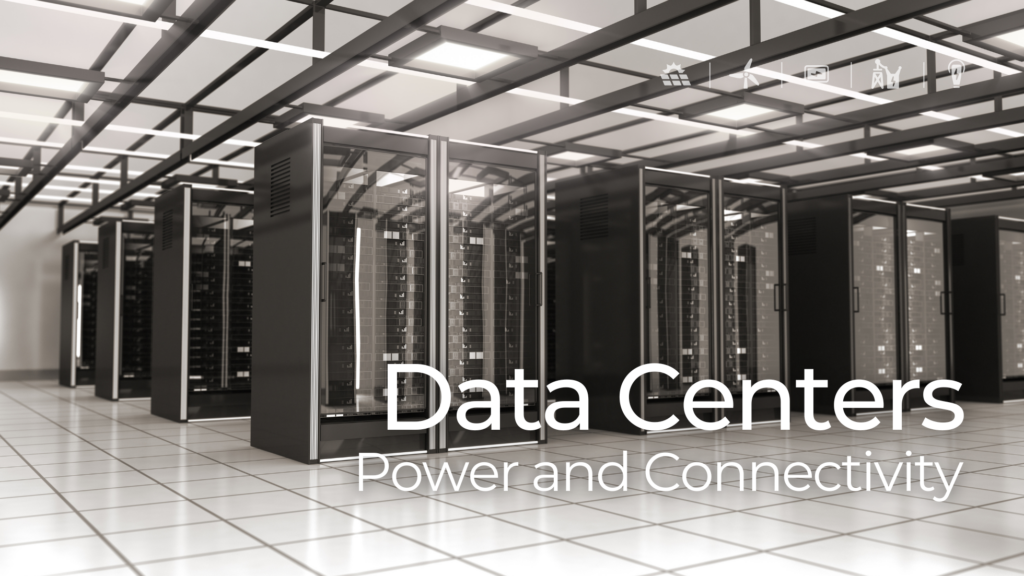
Datacenter facilities get around this by entering into direct peering agreements with major internet exchanges. No middlemen, no residential ISP bottlenecks. We’re talking blade servers on fiber-optic lines, with redundant power systems that keep things running through outages most people never hear about.
When a connection drops mid-migration or halfway through a competitive intelligence sweep, the job doesn’t just pause. Partial results get corrupted, and the whole thing starts over.
Proxy Infrastructure at Scale
Big digital projects need thousands of concurrent connections. Market research across dozens of regions, ad verification campaigns, and inventory monitoring for retail. Residential internet wasn’t designed for that kind of volume. Datacenter infrastructure was.
Teams running these operations typically buy datacenter proxy pools to distribute requests across geographies. One physical server can spin up hundreds of individual proxy instances through virtualization, each carrying its own IP address. Going from 10 connections to 10,000 doesn’t require new contracts or hardware swaps.
The pricing works in their favor, too. Datacenter IPs are generated virtually, so per-unit costs remain well below those of residential or mobile alternatives. For context, the engineering principle of high availability (targeting 99.99% uptime) isn’t some aspirational goal at these facilities. It’s table stakes.
Bandwidth-heavy tasks like catalog scraping or running automated test suites eat through data fast, and that cost difference adds up in a hurry.
The Speed and Detection Tradeoff
Datacenter proxies are roughly 5 to 10 times faster than residential ones. That’s not marketing fluff; it shows up consistently in benchmarks. But websites can spot them more easily because datacenter IPs trace back to hosting companies like AWS or DigitalOcean, not consumer providers like Comcast or BT.
Experienced teams work around this with IP rotation. Rather than blasting 500 requests from a single address, they spread traffic across a pool where each IP handles just two or three requests before cycling out. To the target site, it looks like ordinary visitor traffic from different locations.
Protocol choice is another thing most guides gloss over. HTTP proxies handle straightforward web requests just fine. But SOCKS5 manages any TCP connection, covering email, FTP, and database queries in one setup Cloudflare’s technical documentation notes that SOCKS5 cuts overhead by about 15% compared to HTTP tunneling. If a project touches multiple services (and most large ones do), going HTTP-only creates bottlenecks you won’t notice until the worst possible moment.
Picking the Right Setup for the Job
A fashion retailer tracking prices across 50 competitor websites has completely different infrastructure needs than a dev team running geolocation tests before a product launch. The retailer optimizes for volume and cost per request. The dev team wants geographic coverage and consistent latency.
And geographic coverage isn’t evenly distributed. Most providers do well in the US and Western Europe, but research from Harvard’s Berkman Klein Center on global internet infrastructure found that 67% of datacenter proxy traffic comes from just five countries. Anyone working in Asian or Latin American markets should verify the server’s actual presence rather than trusting a provider’s coverage map at face value.
Authentication is one of those quiet decisions that shapes everything downstream. IP whitelisting keeps things simple for office-based teams, but breaks down with remote workers. API-based credential rotation requires more effort up front but saves headaches later. There’s no universal right call, just the one that matches how your team actually operates.
What’s Shifting in This Space
IPv6 is finally opening up address space that felt theoretical a few years back. Providers offering IPv6 pools already report around 30% performance gains from reduced NAT overhead. For projects that chew through IP addresses quickly, that means fewer rotation headaches and lower costs.
Edge computing is pushing datacenter resources out of big centralized buildings and into smaller facilities closer to end users. The practical payoff is sub-10ms response times for regional traffic, which matters a lot for latency-sensitive work like real-time price monitoring or programmatic ad bidding.
None of this infrastructure stuff is glamorous. But it’s load-bearing. Teams that plan for connectivity from the start ship faster, spend less, and collect cleaner data than those who treat it as an afterthought. That gap only gets wider as projects grow.