Aluminum Cladding Supplier Guide: Choosing Reliable, Weatherproof Facade Solutions
You need a supplier who delivers durable, low-maintenance aluminum cladding that matches your design and performance goals. This Aluminum Cladding Supplier Guide helps you understand what a reliable aluminum cladding supplier should provide, including weather-resistant, recyclable panels in a range of finishes and profiles, plus technical support and installation options to suit residential or commercial projects.
This article shows how to evaluate cladding suppliers, compare product lines and finishes, and match services to your application so you can make a confident choice. Explore what matters most—materials, customization, certifications, and installation support—to ensure the cladding you pick performs and looks the way you expect.
Aluminum Cladding Supplier Overview
You’ll find choices in panel types, finishes, and certifications that affect durability, appearance, and installation. Prioritize material composition, fire performance, and supplier track record to match your project requirements.
Types of Aluminum Cladding Available
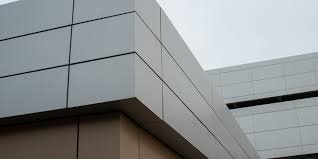
Aluminum composite panels (ACP) use two thin aluminum sheets bonded to a core material like polyethylene (PE) or a fire-retardant mineral core (FR). ACPs deliver flatness, lightweight handling, and wide color/finish options, making them common for façade systems and rainscreens.
Solid pre-coated aluminum panels offer higher rigidity and are suitable for curved forms and high-wind façades. They resist denting better than ACP but cost more per square metre.
Extruded aluminum profiles and cassette systems give you precise joint control and conceal fasteners for a clean, modular look. Perforated and expansion-joint panels provide acoustic, ventilation, and movement solutions. Choose the type based on structural loads, thermal movement, and desired aesthetic.
Quality Standards and Certifications
Look for ISO 9001 for supplier quality management and ISO 14001 for environmental controls if sustainability matters to your project. Fire performance must match local codes: specify tested classifications such as EN 13501-1 (Europe) or ASTM E84/NFPA 285 (US), depending on jurisdiction.
Coating and pre-treatment certifications—like AAMA 2605 for PVDF finishes—ensure long-term color and chalk resistance. Also, verify material test reports for alloy composition (e.g., 3003, 5005, 6061) and mill certificates for tensile strength and coating thickness. Request documented test reports and certificate copies before procurement.
Supplier Selection Criteria
Prioritize suppliers that supply documented test data, traceable mill certificates, and third-party fire tests for the cladding systems you intend to use. Check manufacturing capacity, lead times, and whether they provide shop drawings, mock-ups, and on-site technical support for installation.
Evaluate warranty scope (materials, coating, and system), after-sales service, and local stocking or distribution to reduce delays. Review past project references similar in scale and climate. Finally, confirm fabrication capabilities—cutting, folding, perforating, and anodizing—and logistics experience for your delivery locations.
Applications and Services
You get durable, low-maintenance cladding solutions for both building envelopes and interior features, plus tailored fabrication and on-site technical support to meet project schedules and code requirements.
Commercial and Residential Projects
You can specify aluminum cladding for high-rise façades, retail storefronts, office towers, and multi‑unit residential buildings. Panels and composite systems resist corrosion, offer fire‑retardant core options, and accommodate large-format rainscreen assemblies for wind and moisture control.
For homes, aluminum siding and decorative panels provide lightweight, weather‑resistant finishes and a wide range of factory-applied colors and textures. You’ll benefit from materials that are recyclable and require minimal repainting over decades.
Design teams often choose aluminum for façades that need tight tolerances and crisp joint details; contractors value the ease of handling and the reduced dead load compared with masonry or stone claddings.
Custom Fabrication Options
You can order cut-to-size panels, profiled trays, and curved or folded elements made from 2 mm to 3 mm solid aluminum or ACM with a 0.5 mm face. Finishes include PVDF-coated paints, anodizing, textured powders, and wood- or stone-look laminates to match your design palette.
Fabrication services typically cover CNC routing, waterjet cutting, precision folding, and factory-applied perimeter hemming or reinforcement for concealed fastening. You’ll receive shop drawings and mockups to verify joint details, reveal widths, and attachment points before production.
Specify integrated flashings, coping, and corner pieces to simplify site installation and to maintain weathertight performance at transitions and openings.
Installation and Technical Support
You receive installation guidance, engineered attachment systems, and on-site supervision to ensure compliance with structural and fire codes. Suppliers supply matched subframe systems and brackets sized for wind loads, and they can supply fasteners and sealants approved for the selected finish.
Technical services often include thermal and condensation analysis, humidity control recommendations, and BIM families or CAD details for coordination with MEP and curtain wall systems. You can also request installer training, pre-installation mockups, and post-installation inspections to validate tolerances and waterproofing.
Warranty terms, maintenance schedules, and spare‑part kits are provided so you can plan lifecycle costs and future repairs with clear documentation.