Using Classroom Game Analytics to Inform Teaching Decisions
Educators increasingly rely on classroom game analytics to tailor instruction and support student understanding. Analyzing data generated from interactive games reveals learning patterns that traditional assessments may overlook. Careful interpretation of these insights can improve lesson planning, student engagement, and overall classroom effectiveness.
Digital learning tools provide rich sources of classroom game analytics that offer actionable information for teachers. Integrating these analytics into your workflow helps you identify not just which topics students have mastered, but also where their understanding may be partial or uncertain. By embedding concepts such as Financial Management Skills into relevant gameplay, educators can assess these competencies, ensuring instruction goes beyond rote memorization. These data-driven approaches make it possible to adjust strategies for improved outcomes with greater confidence.
Why game-based performance data matters for teachers
Classroom game analytics give you timely feedback that complements traditional quizzes or exit tickets. By viewing consistent patterns in students’ responses during interactive sessions, you can spot immediate gaps in understanding or skills that might otherwise go undetected.
Unlike conventional checks, these analytics often reveal trends across entire groups and highlight who might need further support. It is important to recognize, however, that not every mistake or low score pinpoints a true content gap. External factors or game design quirks can affect results. Reliable interpretation comes from looking at multiple data points together, rather than drawing conclusions from any single game round.
Interpreting participation, accuracy and response trends
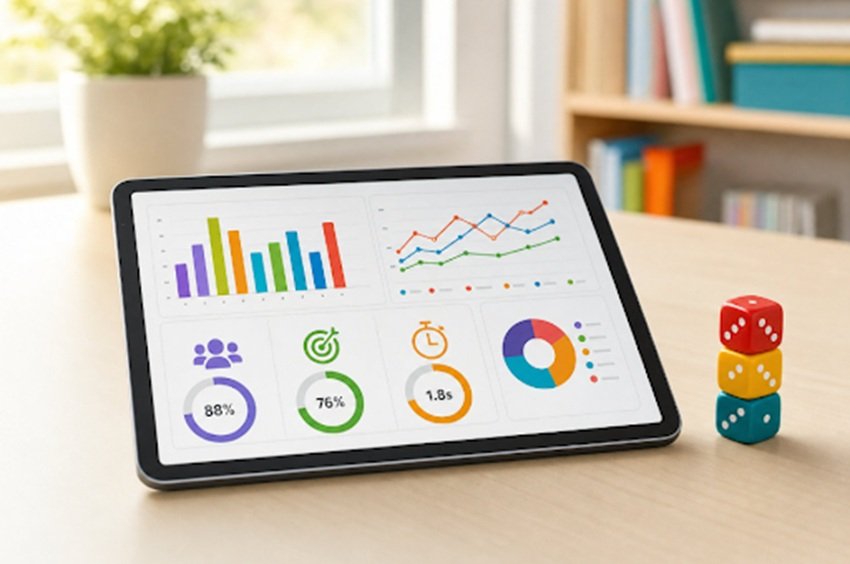
Classroom game analytics provide details like question-by-question accuracy, standard mastery, average response times, and overall participation. High response accuracy in specific areas can show where instruction is working, while slower response times might suggest concepts that require further reinforcement.
Drop-offs in participation or engagement typically indicate when students lose interest or encounter frustration. Reviewing these trends allows you to adapt content, pacing, or groupings to maintain momentum. Patterns in gameplay can clarify whether low scores result from lack of attention, difficulty with content, or unclear instructions.
Translating insights into classroom action steps
Effective use of classroom game analytics includes targeting misconceptions and deciding who may benefit from small-group support or extension tasks. Identifying question types that frequently cause mistakes, combined with an entrepreneurial mindset, allows you to refine both question design and lesson focus.
Adjusting the balance between knowledge recall and higher-order reasoning questions also ensures all students are challenged appropriately. Over time, tracking item-level results can help you streamline reviews and personalize instruction without overwhelming data collection or planning time.