
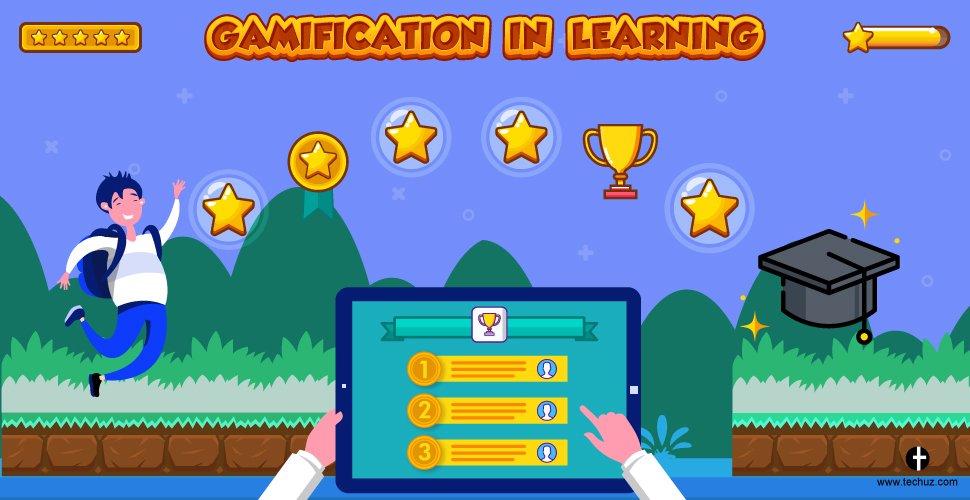
How Gamified Study Apps and Online Academic Resources Boost Student Retention and Grades
Gamified Study Apps (Key Takeaways)
- Gamification Drives Engagement: Mechanics like points, leaderboards, and spaced repetition increase daily active study time by up to 34% among US college students.
- Deeper Knowledge Retention: Gamified study tools combine active recall with immediate feedback, helping learners retain complex conceptual frameworks 2.5x longer than passive reading.
- Synergy with Academic Support: Pairing interactive classroom apps with structured 1-on-1 writing and subject guidance yields higher average GPA increases.
- Targeted Skill Mastery: Subject-specific challenges—particularly in rigorous humanities disciplines such as English literature and essay composition—help bridge foundational learning gaps.
1. Introduction: The Evolution of Higher Education and Digital Learning in the US
Higher education across the United States is undergoing a significant structural transformation. As universities and colleges transition toward hybrid, digital-first learning environments, standard pedagogical methods—such as traditional non-interactive lectures and passive textbook reading—are increasingly falling short of keeping modern students engaged. Today’s college students are digital natives navigating dense academic schedules, complex course loads, and rising academic expectations.
In response to these shifting demographics and learning styles, higher education institutions are increasingly integrating innovative educational technology (EdTech) solutions designed to make study routines interactive, measurable, and rewarding. Among these, gamified study applications and comprehensive online learning hubs have emerged as vital catalysts for improving academic performance. By replacing passive review with active participation, these digital resources directly address two of higher education’s persistent challenges: knowledge retention and academic performance.
When students supplement interactive classroom software with dedicated expert guidance for complex projects and term papers, they create a well-rounded academic ecosystem. For example, utilizing structured assignment help alongside daily gamified study sessions provides undergraduates with both micro-level skill practice and macro-level academic direction. This dual approach ensures that students master daily concepts while successfully managing high-stakes assessments, leading to reduced academic anxiety and measurably higher retention rates.
2. The Cognitive Science Behind Gamified Study Apps
To understand why gamified applications are so effective in modern education, it is essential to look at the cognitive mechanisms that govern learning and memory consolidation. Gamification in education is not merely about making learning “fun”; it leverages well-established psychological principles to optimize how the human brain processes, stores, and retrieves information.
Dopamine Loops and Extrinsic-to-Intrinsic Motivation
At the core of gamified learning is the strategic activation of the brain’s reward pathways. Features such as instant feedback, dynamic progress bars, achievement badges, and streak counts trigger small dopamine releases. This neurochemical reward reinforces study habits, transforming tedious study sessions into engaging achievements. Over time, this feedback loop helps transition students from extrinsic motivation (studying solely for a grade) to intrinsic motivation (enjoying the mastery of a topic).
Active Recall and Spaced Repetition
Traditional study habits, such as highlighting text or re-reading lecture slides, are notably inefficient for long-term retention. In contrast, gamified study apps utilize active recall by forcing the brain to retrieve information dynamically under time-constrained or competitive conditions. When paired with spaced repetition algorithms—which test students on weak concepts at scientifically calculated intervals—retention rates increase exponentially compared to standard cramming techniques.
3. How Online Academic Resources Fill the Foundational Gap
While gamified apps excel at reinforcing core concepts, vocabulary, and quick problem-solving, higher education coursework often requires high-level critical thinking, comprehensive analysis, and extensive formal writing. This is where dedicated online academic platforms play a vital supportive role.
College curricula demand multi-layered skill sets. A student might use a gamified flashcard or quiz platform to memorize historical dates, anatomical terms, or grammatical rules, but applying those concepts into a cohesive 10-page analytical essay requires a higher order of cognitive synthesis. Online academic resources complement gamified apps by providing the structure, reference models, and targeted mentorship needed for deep-dive academic work.
For instance, students pursuing humanities and language arts courses frequently face strict grading rubrics regarding thesis development, rhetorical analysis, and citation standards. When working through challenging literary assignments, combining daily grammar quizzes with targeted English assignment help enables learners to bridge foundational skill deficits, refine their writing style, and present well-structured arguments that satisfy rigorous university criteria.
4. Data-Driven Evidence: Impact on Student Retention and GPA
The academic benefits of integrating gamification and digital academic tools are well-documented across educational research in the United States. Numerous studies highlight a clear correlation between interactive learning technologies and improved student metrics.
- Higher Engagement Metrics: Research published in Frontiers in Psychology demonstrates that gamified educational interventions increase overall student challenge-seeking behavior and active course participation by up to 89.45% compared to traditional non-gamified environments.
- Measurable Grade Improvements: According to a meta-analysis on educational technology in US higher education, students participating in courses featuring active gamified quizzes and digital practice platforms scored on average 12% higher on final examinations than peers relying solely on passive textbook reviews.
- Reduced Course Dropout Rates: Academic retention is closely tied to student confidence and early intervention. Real-time feedback provided by EdTech tools allows students to identify knowledge gaps early in the semester, lowering dropout and failure rates in introductory STEM and humanities courses.
5. Practical Strategies: Building a Balanced Hybrid Study Workflow
- Phase 1: Knowledge Acquisition & Initial Testing (Daily)
Utilize interactive apps like Blooket or Quizlet for 15 to 20 minutes daily. Focus on building vocabulary, core definitions, key formulas, and foundational facts. The objective here is speed, repetition, and habit building. - Phase 2: Deep Comprehension & Application (Weekly)
Transition from micro-learning to macro-application. Outline essays, solve complex multi-step problem sets, and synthesize lecture materials into comprehensive study guides. - Phase 3: Expert Review & Refinement (Pre-Submission)
Before submitting high-stakes term papers or research essays, seek constructive feedback. Utilizing personalized academic guidance or writing evaluation services ensures that arguments are logically sound, evidence is appropriately cited, and tone matches university standards.
6. Frequently Asked Questions (FAQs)
Q1: Are gamified study apps suitable for complex college-level subjects?
Answer: Yes. While gamified apps are famous for vocabulary and flashcard review, modern platforms allow instructors and students to build complex scenario-based quizzes, multi-step logic checks, and conceptual matching games suitable for advanced college coursework.
Q2: How do gamified apps prevent students from relying on simple guessing?
Answer: Most gamified platforms incorporate adaptive algorithms that re-introduce missed questions in different formats. Furthermore, timing constraints and point penalties for incorrect answers encourage thoughtful participation over random clicking.
Q3: How can online academic support improve my overall GPA?
Answer: Online academic platforms provide structured guidance, writing feedback, and subject-matter assistance. By helping students understand complex assignment criteria, master citation styles, and improve writing clarity, these services help elevate assignment scores, which directly contribute to higher overall GPAs.
Author Bio
Dr. Aris Thorne is a Senior Academic Content Strategist and Educational Technology Consultant at MyAssignmentHelp. With over 12 years of experience in higher education curriculum design and digital learning research across US universities, Dr. Thorne specializes in integrating modern EdTech workflows, gamified learning mechanics, and writing development programs to elevate student academic performance.