
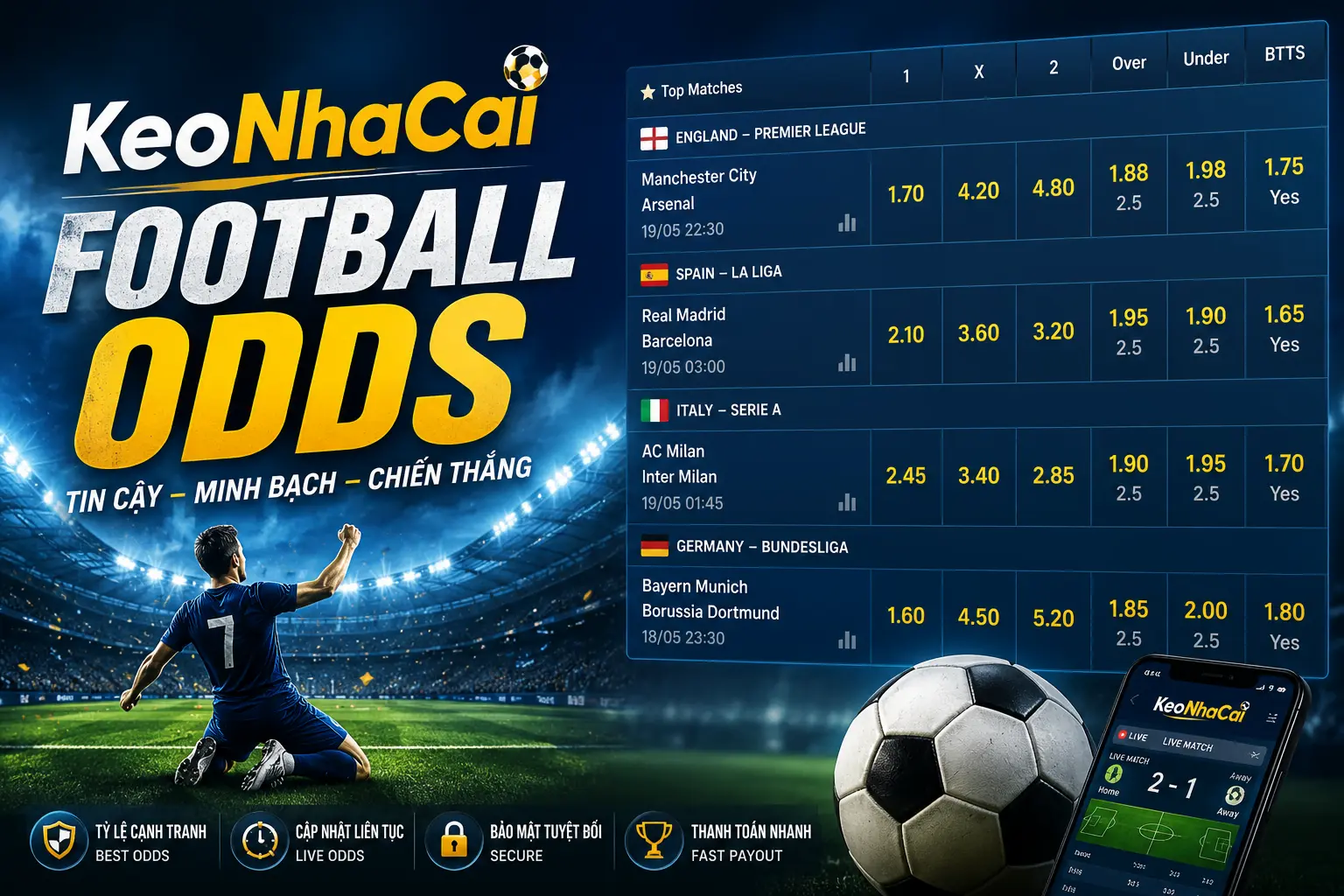
KeoNhaCai Football Odds – Latest Betting Lines and Expert Analysis
If you’re searching for kèo nhà cái Football Odds – Latest Betting Lines and Expert Analysis, you’re likely looking for quick, reliable guidance on what to bet, why the odds have moved, and how to apply expert reasoning to matchups without falling for common betting traps. In this guide, you’ll learn how football betting lines are formed, what “latest odds” usually represent in real time, and how to interpret key markets—so you can make smarter decisions across different leagues and match styles.
What “KeoNhaCai Football Odds” Means in Simple Terms
KeoNhaCai Football Odds – Latest Betting Lines and Expert Analysis refers to the current pricing used for betting football matches (often called “lines” or “betting odds”) paired with interpretation from experienced bettors or analysts. In plain language, odds are the bookmaker’s assessment of how likely an outcome is—then they price in risk, public betting behavior, and sometimes team news or tactical factors. When odds are “latest,” it typically means they were updated after new information reached the market, such as injuries, suspensions, lineup hints, weather changes, or changes in betting volume.
A helpful way to think about odds is this: if odds shift, it doesn’t always mean the sport suddenly changed—more often it means new information or money flow caused the bookmaker to re-balance probabilities. Expert analysis, meanwhile, helps you translate those odds into a betting edge (or recognize when the market is already pricing things correctly).
Where Latest Betting Lines Usually Come From
A bettor’s first goal is understanding what drives the number you see. Football odds typically move for three broad reasons: football fundamentals, information updates, and market behavior. Fundamentals include team form, home advantage, recent goal trends, and the matchup between styles (for example, a team that presses high vs. one that plays out from the back).
Information updates include injury reports, availability of key midfielders, rotation risk after congested fixtures, and managerial changes. Market behavior includes how much bettors are placing on each outcome; when large sums flood one side, odds adjust to manage exposure.
To use “latest lines” correctly, you should avoid treating them as static facts. Instead, treat them like a snapshot of uncertainty. The smarter approach is to compare what the market thinks today with what you believe will happen based on match context. When your view differs, you may have value; when your view matches the odds, betting becomes more about discipline and bankroll management than prediction.
Key Markets to Focus On for Expert-Style Betting
Experts rarely rely on just one market; they look at multiple angles to reduce uncertainty. The most common football markets include moneyline outcomes (home win, draw, away win), over/under goals, and handicap-style betting (which adjusts risk to account for team strength differences). Each market answers a slightly different question.
Moneyline is about who wins the match, but it can be volatile because draws can be common in certain league styles, and favorites can underperform when tactical matchups are unfavorable. Over/under goals is often more stable when you can assess how likely both teams are to create chances; it ties directly to tempo, pressing intensity, and finishing quality. Handicap approaches help when you think one team has a clear advantage but might still drop points due to randomness. By triangulating across markets, you can avoid overcommitting to a single narrative.
How to Read Odds Like a Pro (Using the Keyword Idea)
The keyword idea behind “KeoNhaCai Football Odds – Latest Betting Lines and Expert Analysis” is that odds aren’t just numbers—they’re a decision tool. Here’s how experts typically read them: first, identify whether the favorite is being priced aggressively or modestly; second, check whether the market is reacting to news or public sentiment; third, evaluate whether the line implies a realistic match scenario for both teams.
A practical method is to ask: does the odds move make sense with the team’s current tactical reality? For example, if a striker is ruled out, you’d expect goal-related markets to shift and the team’s attacking odds to soften. If a backup center-back is starting, you’d look for goal markets to reflect higher defensive risk. If none of those factors exist but odds still swing, the movement might be driven by heavy money rather than genuine matchup change—meaning your analysis must be sharper.
Common Reasons Odds Move and What You Should Check
Odds frequently change close to kickoff, and that’s exactly when bettors can make mistakes by acting on rumors. The best approach is to confirm whether information is likely to impact performance. Check expected lineups from trusted sources, scan credible injury and suspension updates, and consider rotation risk for teams with midweek fixtures. Also look at weather and pitch conditions: wind, heavy rain, or poor turf can reduce passing quality and change shot selection patterns, which can influence totals and handicap values.
Another overlooked factor is motivation and league context. A mid-table team with nothing to play for may approach matches differently than a team fighting for promotion or survival. Meanwhile, teams under pressure sometimes play with more urgency, which can increase shot volume but also increase defensive errors. If you see odds tightening without clear injury information, it may reflect broader expectation shifts rather than direct lineup changes.
Expert Checklist for Value Betting
To turn “latest lines” into a consistent process, use a simple checklist mindset. Start with match basics: league style, home/away splits, and whether both teams tend to score or cancel each other out. Then connect those trends to the current matchup: is there a clear advantage in midfield, do one or both teams press effectively, and can either side exploit specific defensive weaknesses? Finally, compare your expected scenario to the market.
If you believe the favorite can win more comfortably than the odds suggest, that can support certain handicap or draw-no-bet styles. If you expect a tight match but the goal market prices a shootout, that mismatch could signal value against overs. Experts also watch for “line shopping” tendencies—when different outcomes become mispriced due to late money. Your goal isn’t to predict perfectly; it’s to bet when the odds disagree with your probability estimate.
Suggested Betting Approach by Match Type
Different matchups tend to reward different reasoning. In derby-style games with high intensity and tactical caution, draws can be more common, and goal totals can be lower than expected. In matches between top attackers and porous defenses, over-goal markets may align with the odds, but it’s crucial to confirm that both teams create chances rather than relying on a single dominant side.
In games where one team controls territory, and the other relies on counterattacks, handicap markets can be useful because even a strong but not guaranteed win can still cover. However, be careful: counterattacking styles can be high variance, so you should avoid overconfidence when the market is already pricing the risk correctly. The best expert analysis blends probabilities with scenario logic, not just “form streaks.”
Interpreting Team News Without Overreacting
Team news drives the biggest odds shifts, but not all news affects performance equally. A confirmed starting striker out is usually high impact; a minor knock might only affect minutes and can be priced accordingly. When a player is doubtful, check whether the backup’s role profile changes the team’s approach. A like-for-like replacement may keep tactics stable; a different type of forward can change build-up patterns and finishing chances.
Also consider coach tendencies. Some managers rotate heavily; others keep systems consistent. If rotation is likely, the market might underprice uncertainty, creating a possible edge for the side you expect to field a stronger starting XI. But if the market already anticipates rotation, the advantage disappears. That’s why expert analysis focuses on what odds reflect—then compares it with what you can justify.
Quick Guide to Using KeoNhaCai Football Odds in Real Betting Decisions
If you want to apply KeoNhaCai Football Odds – Latest Betting Lines and Expert Analysis in a practical way, use this step-by-step workflow to avoid emotional decisions:
- Collect the latest odds snapshot before kickoff and note the biggest movements, especially in goal and handicap markets.
- Check team news credibility, focusing on confirmed lineups or reliable injury updates rather than speculation.
- Match odds to match style, asking whether the matchup supports low-scoring caution or chance-heavy play.
- Find the mismatch between your expected probability and the implied probability from odds, then decide if it’s value.
- Choose one or two markets max for the bet, because over-parlaying or over-diversifying can dilute your edge.
Troubleshooting Tips for Common Betting Problems
If you feel unsure, don’t force a bet. Review whether your doubts come from missing information (like lineup uncertainty) or from inconsistency in your own reasoning. Another common issue is chasing odds after a major move; if you missed the best number, either wait for confirmed lineup clarity or skip. Finally, avoid increasing stake size after a losing streak—this can turn a disciplined strategy into a reactive one.
Safety Precautions for Responsible Betting
Set a budget you can afford to lose, and treat betting as entertainment rather than a guaranteed income source. Keep records of your reasoning and outcomes so you can improve later. If you ever feel pressure to recoup losses, pause and step back—responsible decision-making protects both bankroll and mindset.
Conclusion
keonhacai Football Odds – Latest Betting Lines and Expert Analysis is best understood as a blend of up-to-date odds pricing and disciplined interpretation: odds reflect probabilities influenced by team news, tactical context, and market behavior, while expert analysis helps you translate those movements into value decisions. By focusing on key markets, checking why lines move, comparing your expected match scenario to the implied probabilities, and using a clear checklist rather than emotion, you can approach football betting with greater clarity and consistency.