Blooket Cyber Hack Mode (Formerly Crypto Hack): How it Works + Classroom Teacher Guide
Last verified: August 10, 2026
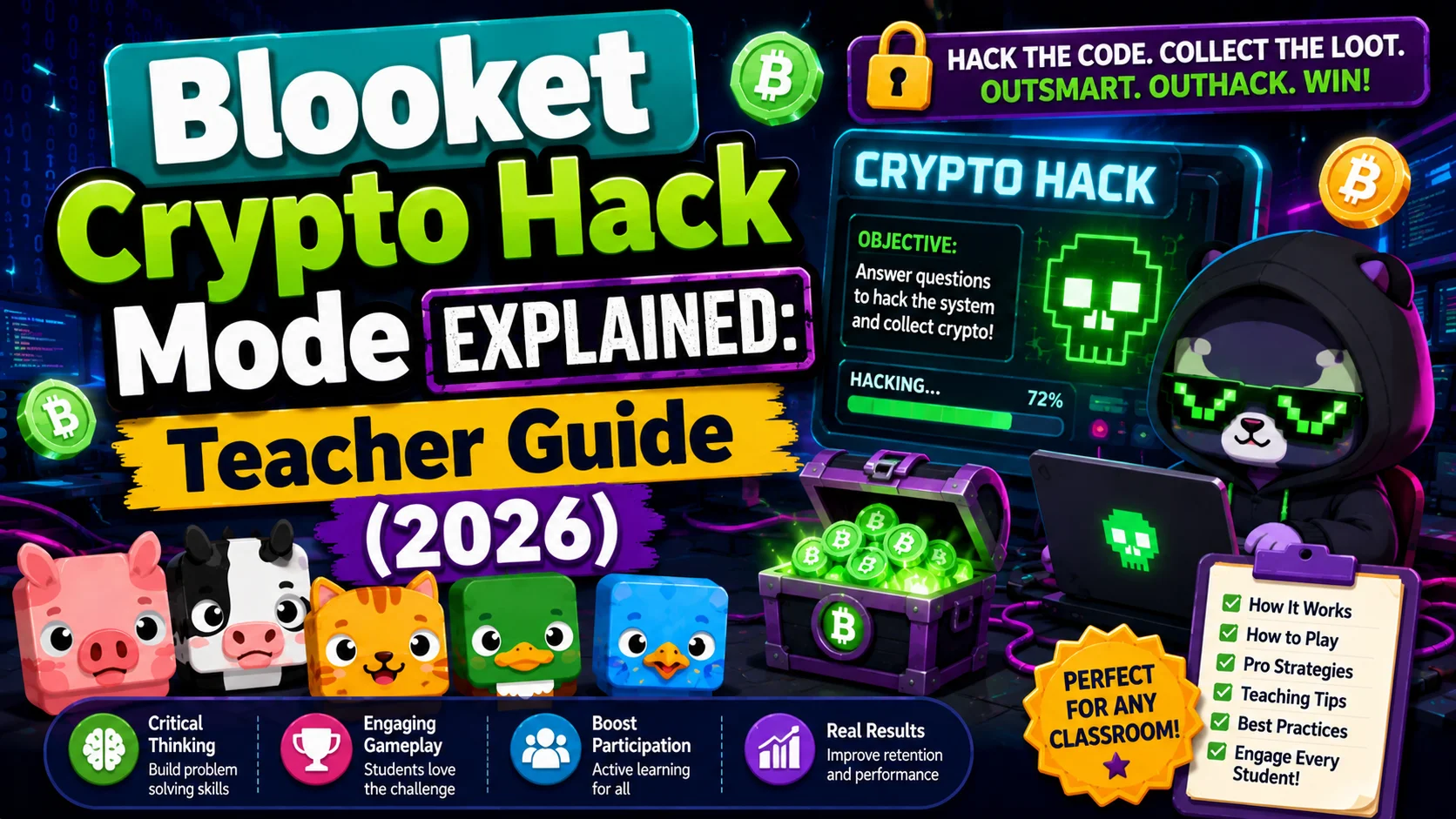
Quick Answer: Blooket’s Cyber Hack mode (previously known as Crypto Hack) has students mine Credits by answering questions correctly, then choose to hack another student’s password-protected defenses to steal Credits, or protect their own with a password. The mode combines speed with a genuine memory challenge, making it a strong fit for older students.
What is Cyber Hack Game Mode in Blooket
Important Note: This mode was previously called Crypto Hack, with a currency called Crypto. Blooket has since renamed it to Cyber Hack, with the currency renamed to Credits. The mechanic itself is unchanged. This guide uses the current official name throughout.
Blooket Cyber Hack is one of the most unique game modes on the platform. It combines the speed of standard answering with a memory challenge (protecting your own defenses with a password) and a theft mechanic (breaking into other students’ Credit stashes). The result is a mode that rewards fast answering and quick thinking, making it a strong choice for older students who need more than just a points race.
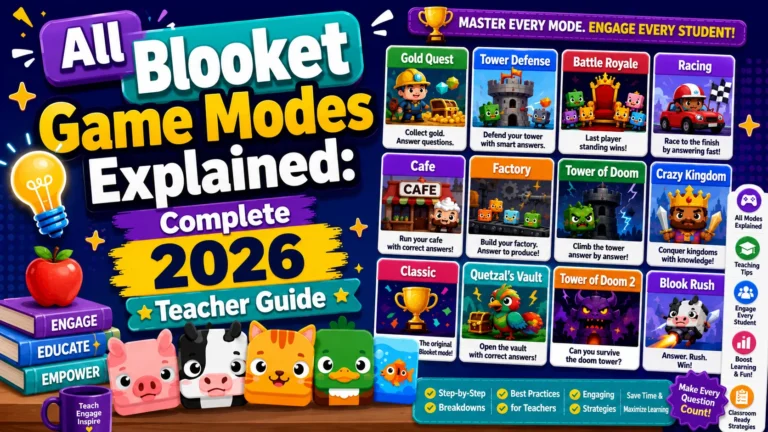
Complete Guide About → All Blooket Game Modes for Teachers
Blooket Cyber Hack at a Glance
| Stats | Value |
| Skills | Memory and Speed |
| Difficulty | Normal |
| Ideal Time | 8 minutes |
| Questions | Self-Paced, Normal Frequency |
| Min Players | 2 |
| Ideal Class Size | 8+ |
| Max Players (Free) | 60 |
| Max Players (Plus) | 300 |
| Live Hostable | Yes |
| Solo/HW | Yes |
How the Blooket Cyber Hack Works
Phase 1: Mining
Correct answers award you Credits, the in-game currency. Your current Credits total is displayed on your screen and on the live leaderboard. The more questions you answer correctly, the more Credits you accumulate.
Phase 2: Hacking
After a correct answer, you can choose to spend a question’s progress on a Hack attempt instead of mining. Hacking lets you attempt to break into another student’s defenses. You select a target from the player list and initiate the hack.
If the target’s defenses are unprotected (no password set, or the password attempt fails), you steal a portion of their Credits and add it to yours.
Phase 3: Password Protection
To protect your Credits from hacks, you set a password after each mining event. The password is a short code or word you create. If someone hacks you, you have a brief window to type your own password to block the theft.
Here is where the memory challenge comes in: students who set and forget their own passwords are vulnerable. Students who remember them consistently can block incoming hacks even when they are targeted repeatedly.
The Memory Layer
The most distinctive thing about Cyber Hack is that remembering your own password matters. In a fast-paced game where students are simultaneously answering questions, managing their Credits balance, and deciding when to hack, forgetting a password they set 90 seconds ago is a genuine challenge.
This creates a real multitasking and working memory demand that does not exist in any other Blooket mode.
Step-By-Step Guide → How to Host a Blooket Game
Why Blooket Cyber Hack Works for Older Students
→ It avoids the “pure luck” complaint. Some students find Gold Quest frustrating because a lucky chest steal can erase their entire advantage. Cyber Hack rewards consistent answering (mining) and smart decision-making (when to hack, how to protect) more reliably. The best player on a given day genuinely tends to win.
→ It creates strategic decisions every round. Should you mine more, which is safer and accumulates steadily, or hack, which is riskier but potentially bigger gain? Who is worth hacking, the leader or an easier target? These decisions make the game feel more mature and complex.
→ It rewards working memory. For classes where cognitive challenge matters to learning outcomes, Cyber Hack is the mode that most directly exercises memory alongside subject knowledge.
Full Game Mode → Battle Royale & Blook Rush Guide
Classroom Tips for Blooket Cyber Hack
Brief the class before starting. Unlike Classic or Gold Quest, Cyber Hack has enough mechanics that a 60-second explanation before launch significantly improves the experience. Cover:
- Correct answers mine Credits.
- You can choose to hack instead.
- Set a password after mining.
- Remember your password to block hacks.
→ Use it with grades 5 and up. The password memory mechanic adds cognitive complexity that younger students sometimes find frustrating rather than fun. With middle and high school students, the same complexity reads as an engaging challenge.
→ Pair it with content that requires precision. The Normal frequency and self-paced format give students a bit more time per question than Classic or Gold Quest. This makes it better for content with fine answer options, longer question text, or application-level thinking.
→ Watch for students who mine only. Some students will play Cyber Hack in pure mining mode, never hacking, and still perform well. That is a valid strategy. But if you want to encourage the full experience, prompt students mid-game: “If you haven’t tried hacking yet, this is a good time.”
Blooket Cyber Hack for Homework
Cyber Hack can be assigned as solo homework. In solo mode, the hacking mechanic is simplified, since students hack computer-controlled opponents rather than classmates, but the mining and password protection elements remain. It is a suitable homework assignment for older students who enjoy a more complex solo challenge than Classic or Study mode.
Source: verified from Blooket’s official Game Mode Previews documentation, which confirms the current name (Cyber Hack) and currency (Credits).
Where to Go Next
- Want to learn more about the platform? See the Blooket guide
- Want the full teacher toolkit overview? Visit the For Teachers hub
- Introducing this to students directly? See the For Students hub
Have a different question? Check our Frequently Asked Questions or Blooket Help Center
Frequently Asked Questions
Is Cyber Hack the same mode as Crypto Hack?
Yes. Blooket renamed the mode from Crypto Hack to Cyber Hack, and its currency from Crypto to Credits. The core mechanic (mine, hack, protect with a password) is unchanged.
How do students earn Credits in this mode?
By answering questions correctly. Each correct answer mines Credits, which is added to your total and displayed on the live leaderboard.
What happens if my defenses get hacked?
If another student targets you and your password fails or was never set, they steal a portion of your Credits. Setting a password and remembering it lets you block the attempt.
Do I have to hack other players to do well?
No. A mining-only strategy, where you never attempt a hack, is a valid and often successful approach. Hacking adds risk and reward but is not required to win.
Why is Cyber Hack considered better for older students?
The password memory mechanic adds a genuine cognitive load that younger students can find frustrating, while middle and high school students tend to find the same complexity engaging.
Can Cyber Hack be assigned as homework?
Yes. In solo mode, students hack computer-controlled opponents instead of classmates, but the mining and password protection mechanics stay the same.
Does Cyber Hack require Blooket Plus?
No. It is available on the free (Starter) plan with the standard 60-player live game cap. Blooket Plus raises that cap to 300 players.